

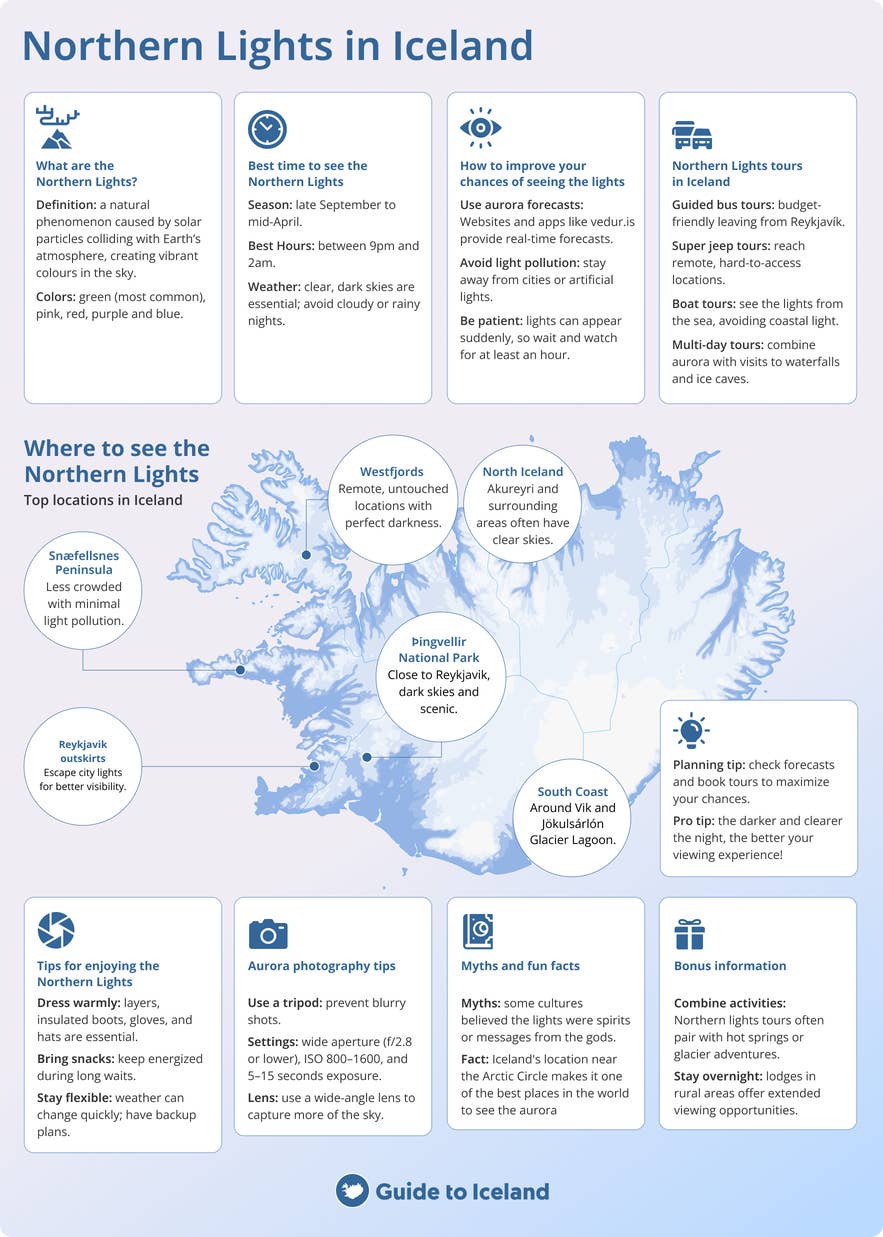
North Iceland and the Westfjords give the darkest, clearest northern lights skies.
The Northern Lights also known as the Aurora Borealis, are one of the best attractions in the Nordic region. You can’t see it from every part of the Nordic region. You need to go to specific areas of the Nordic region to enjoy the Northern Lights.
Linda and I have chased auroras across every region for years. In this blog we break down real conditions, local patterns, and proven spots. We think it will be much more helpful for you.
:max_bytes(150000):strip_icc()/northern-lights-kirkjufell-mountain-snaefellsnes-iceland-ICELANDLIGHTS1218-824f48715748425f828f05aa2a28dfe0.jpg)
Best places in Iceland to see the northern lights at a glance
If you ask what part of Iceland is best to see northern lights, here is the short list I trust after many seasons:
- North Iceland. Lake Mývatn, Akureyri, Húsavík, and the Tröllaskagi Peninsula often have clearer winter nights.
- Westfjords. Ísafjörður, Flateyri, and quiet fjords offer deep darkness and very low light pollution.
- Snæfellsnes Peninsula. Kirkjufell, Búðir, and Arnarstapi balance easy access with dark skies.
- Reykjanes Peninsula. Close to Keflavík Airport with fast-clearing skies after storms and many pullouts.
- South Coast. Dyrhólaey, Vik, and black sand beaches are dramatic but can be cloudy at times.
- Eastfjords. Egilsstaðir, Borgarfjörður Eystri, and quiet coves can be very clear when cold air settles.
- Highlands. Unreal darkness, but winter access is limited and needs expert vehicles.
Why location, weather, and darkness matter
Iceland sits under the auroral oval. That means the country can see lights even at a low Kp index. Kp 2 is often enough. You do not need a huge solar storm, but you do need clear skies and darkness.
Cloud cover is the main blocker. The north and northeast can enjoy more stable, colder, and clearer air in winter. Mountain ranges can block moist air and create breaks in the clouds. Wind after a cold front can also clear the sky fast, especially on Reykjanes and the South Coast.
Light pollution washes out faint aurora. Drive 20 to 40 minutes from towns for best views. Moonlight can brighten the land and help photos, but it hides faint bands. It is still fine for strong shows. These are the core reasons people ask what part of Iceland is best to see northern lights, and they are the lens I use to pick a spot each night.
North Iceland: Mývatn, Akureyri, and the Arctic edge
North Iceland often tops the answer to what part of Iceland is best to see northern lights. Nights can be colder and drier. That boosts the chance of clear windows. Top bases include Akureyri for services and Mývatn for dark, open horizons.
Great spots:
- Lake Mývatn pullouts and pseudocraters offer 360-degree views.
- Húsavík harbor hills give a nice arc to the north.
- Siglufjörður mountain roads reveal big sky, but check road and avalanche reports.
On one March tour, we waited in light haze near Mývatn. A northerly breeze opened a clear hole. The sky erupted in a green corona over the lava fields. That night sealed my view that North Iceland often delivers when it counts.
Westfjords: Remote, dark, rewarding
The Westfjords feel far from everywhere. They are very dark and very quiet. That is why many pros say this is what part of Iceland is best to see northern lights for pure sky quality. The flipside is winter access. Roads can close, and storms hit hard.
Where to try:
- Ísafjörður surroundings offer quick escapes from town glow.
- Flateyri and Önundarfjörður have long fjords with big sky.
- Rauðisandur beach is vast and empty.
Bring a 4×4, watch forecasts, and plan backup nights. The reward is a deep-black sky that makes greens pop and reds appear in strong events.
Snæfellsnes and West Iceland: Balanced and close to Reykjavík
If you have a short trip, this may be what part of Iceland is best to see northern lights for you. It is a sweet spot between access, scenery, and darkness. You can leave Reykjavík in the afternoon, scout, and be set by dusk.
Try these:
- Kirkjufell near Grundarfjörður for iconic shots and reflections.
- Búðir black church with Snæfellsjökull in the distance.
- Arnarstapi cliffs for clean horizons and dramatic sea views.
Clouds often break along the coast after fronts. I like to “chase the gap” between low clouds and clear sea air on this peninsula.
South Coast and Reykjanes: Short-trip favorites
Reykjanes is close to the airport and often clears fast in wind. The South Coast offers huge views and easy stops. These are top picks if you land late or have only one night. For many visitors, this is what part of Iceland is best to see northern lights with minimal driving.
Good locations:
- Kleifarvatn and Krýsuvík on Reykjanes for dark lakes and lava.
- Reykjanesviti lighthouse cliffs with wide sky.
- Dyrhólaey and Vik for sea arches and black sand.
Drive 30 to 60 minutes from Reykjavík to cut light pollution. Beware rogue waves on beaches. Stay well back from the surf in the dark.
Eastfjords and the Highlands: Seasonal gems
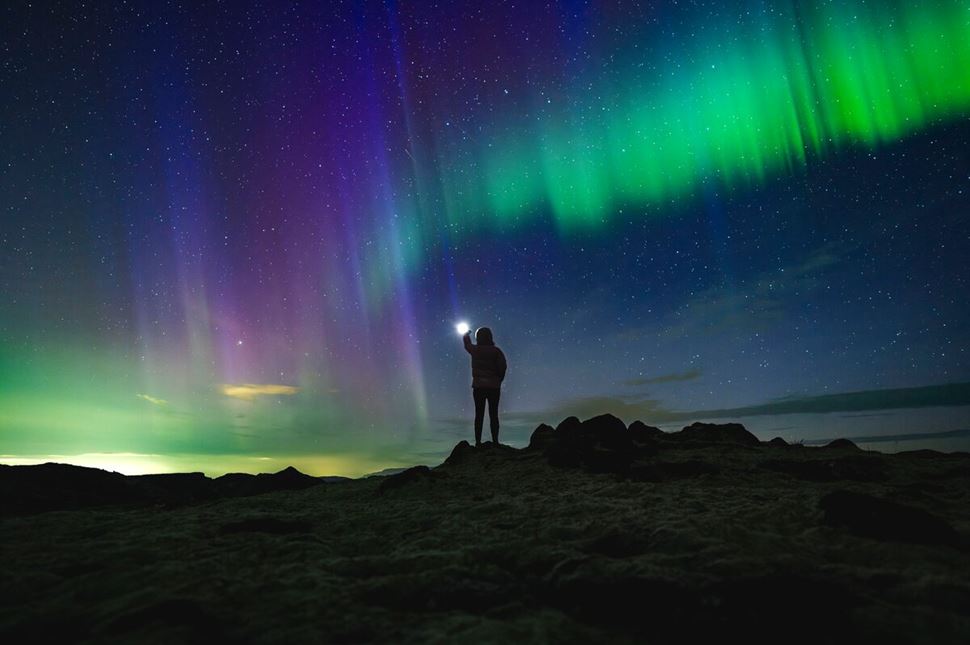
The Eastfjords get calm, cold air in some winter patterns. That can mean crystal skies. For few crowds and clear nights, this can be what part of Iceland is best to see northern lights on a Ring Road plan.
Best picks:
- Egilsstaðir area, including Lake Lagarfljót pullouts.
- Borgarfjörður Eystri for quiet fjord viewpoints.
- Vestrahorn and Stokksnes (technically Southeast) for iconic peaks and reflections.
The Highlands are the darkest of all. But winter access is limited to expert super-jeep crews. If you visit in late August or early September when some tracks are still open and nights are dark again, you can score dream conditions.

Source: icelandtours.is
When to go and how to forecast
The aurora season in Iceland runs from late August to mid-April. Equinox months, September and March, have a slight statistical edge. The sun does not set long enough in May to July, so you cannot see the lights then.
Check three things nightly:
- Cloud cover maps at multiple levels.
- Kp index and short-term solar wind data.
- Moon phase and rise/set times.
For Iceland, Kp 2 or 3 is plenty. I book two to four nights in good regions to raise odds. This is the real secret behind what part of Iceland is best to see northern lights: pick the clearest region that night, not only the prettiest map pin.
PAA: What Kp do you need in Iceland?
Kp 2 is often enough across most of Iceland. Kp 3 to 4 brings strong, overhead displays.
PAA: Can you see auroras with a full moon?
Yes. The moon lights the landscape. Very faint bands may fade, but strong aurora still shines.
PAA: What time of night is best?
9 p.m. to 1 a.m. is a common peak, but activity can flare any time it is dark. Stay flexible and watch the sky.
Sample itineraries for aurora hunters
If you wonder what part of Iceland is best to see northern lights for your schedule, use these plans. They mix scenic days with smart night stops.
3-day plan for first-timers
- Day 1. Land, pick up car, scout Reykjanes. Sunset at Kleifarvatn. Night watch near Reykjanesviti.
- Day 2. Drive Snæfellsnes. Day sights at Arnarstapi and Búðir. Night watch at Kirkjufell.
- Day 3. Weather call. If clear south, go to Dyrhólaey. If clearer west, return to Snæfellsnes.
7-day plan with higher odds
- Days 1–2. West Iceland and Snæfellsnes. Choose clear nights there.
- Days 3–4. North Iceland base in Akureyri or Mývatn. Hunt clear spells each night.
- Days 5–6. East or South Coast based on cloud maps. Keep drives short at night.
- Day 7. Float night near Reykjanes for a final chance before your flight.
I built these from years of guiding. The plan is simple. Go where it is clear. That is how you win this chase.
Photography, comfort, and safety tips
Well-prepared nights turn into great memories. I have learned these lessons the hard way.
Camera basics
- Manual focus at infinity on a bright star, then tape the ring.
- Aperture f/1.4 to f/2.8, ISO 1600 to 3200, shutter 2 to 10 seconds.
- Shoot RAW, start white balance near 3500 to 4000K.
Comfort and safety
- Wear warm layers, windproof shell, and insulated boots.
- Carry microspikes, headlamp with red light, and a thermos.
- Check road conditions and closures before you drive.
- Park well off the road and use hazard lights when stopped.
Etiquette in groups
- Avoid headlamp flare into others’ shots.
- Share foregrounds and move between frames.
- Keep noise down for those recording video.
Following these steps matters as much as knowing what part of Iceland is best to see northern lights. Good prep is what keeps you safe and ready when the sky explodes.
Frequently Asked Questions of what part of iceland is best to see northern lights
Is Reykjavík good for the northern lights?
You can see them in Reykjavík on strong nights, but light pollution is high. Drive 30 to 60 minutes out for much better contrast.
Do I need a guide to find auroras?
A guide helps with forecasts, safety, and local spots. If you self-drive, check weather, carry a plan B, and avoid risky roads.
What month is best to see the lights in Iceland?
September to March offer long dark nights. I favor mid-September to late March for a balance of darkness and road safety.
How long should I wait outside?
Give it at least 30 to 60 minutes. Auroras pulse in waves, so patience often pays off.
Can I see auroras at Kp 1 in Iceland?
Sometimes yes, especially in the north under a very dark sky. Kp 2 to 3 is a safer bet for most travelers.
Where should I stay for easy access?
Base near Snæfellsnes, Akureyri or Mývatn, or along Reykjanes. These hubs let you pivot fast to clearer skies.
Does the moon ruin the show?
No. A bright moon hides faint bands but makes landscapes look great. Strong aurora still shines over a moonlit coast.
Conclusion
The honest answer to what part of Iceland is best to see northern lights is this: pick the region with the clearest sky on the night you hunt. North Iceland and the Westfjords often win on clarity and darkness. Snæfellsnes, Reykjanes, and the South Coast win on access and fast weather windows.
Plan two to four nights, track clouds and Kp, and be ready to move. Do that, and your odds soar. If you want more help, subscribe for updated route maps, gear checklists, and nightly chase tips.


