

Sweden is Nordic, EU, Swedish-speaking; Switzerland is Alpine, multilingual, neutral, non-EU.
If you have ever mixed up Sweden and Switzerland, you are not alone. I have visited both countries and seen how easy it is to get confused.
In this guide, I share the main differences—from the landscapes and language to money, work, and travel tips—so you can travel smarter and enjoy your trip.

Sweden vs Switzerland at a Glance
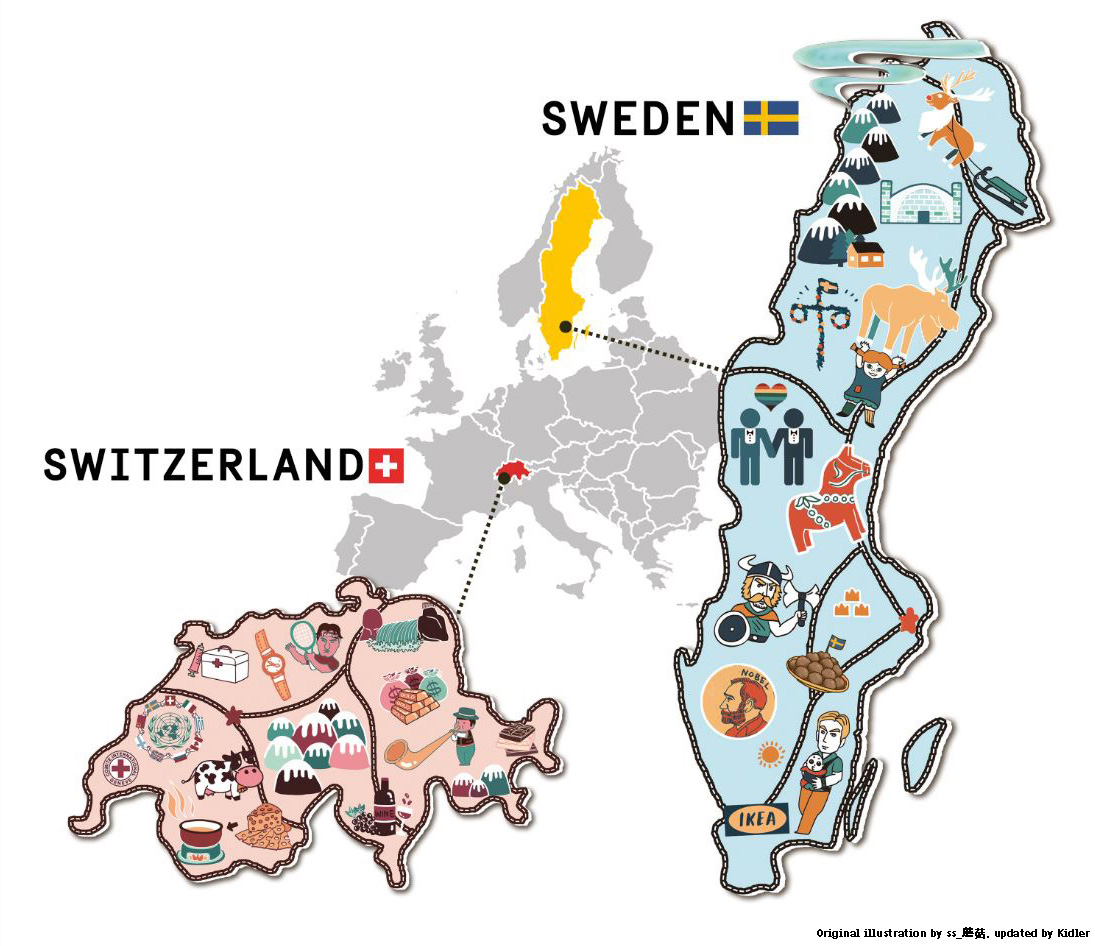
Think of Sweden as pine forests, islands, and the Northern Lights. Think of Switzerland as jagged peaks, fondue, and watch shops. Both are safe, modern, and proud of quality. Yet the daily feel is very different.
Key fast facts that show the difference between sweden and switzer:
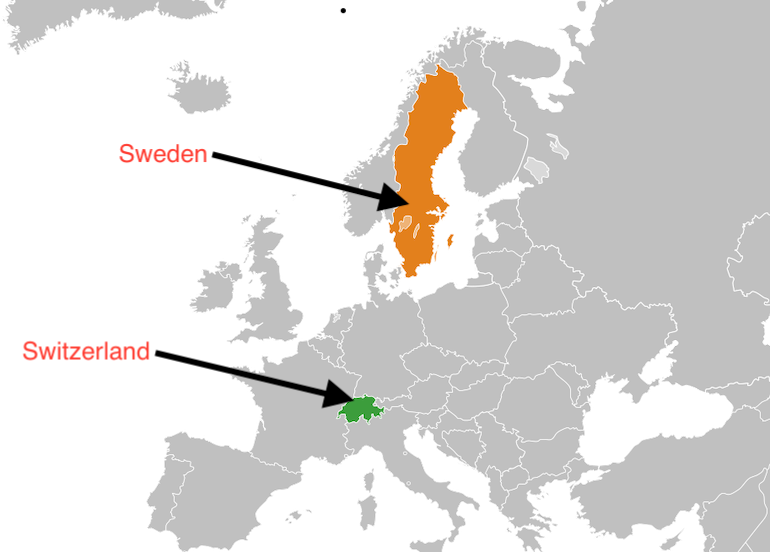
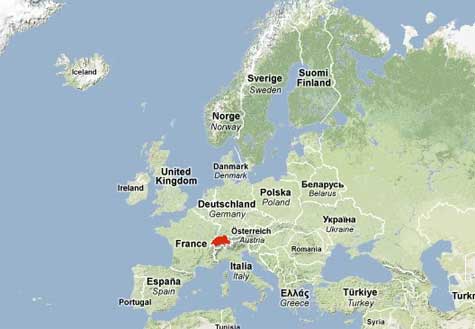
- Location: Sweden is in Scandinavia, facing the Baltic Sea. Switzerland sits in Central Europe, landlocked in the Alps.
- Capitals: Sweden’s capital is Stockholm. Switzerland’s federal city is Bern.
- Languages: Sweden speaks Swedish. Switzerland has German, French, Italian, and Romansh.
- Currency: Sweden uses the Swedish krona (SEK). Switzerland uses the Swiss franc (CHF).
- EU and NATO: Sweden is in the EU and Schengen and is a NATO member. Switzerland is not in the EU, is in Schengen, and is famously neutral, not in NATO.
- Landscape: Sweden is wide, flat to rolling, with many lakes and coasts. Switzerland is mountainous with deep valleys and high passes.
When I first worked in Stockholm, fika breaks set a calm pace. In Zurich, precision ruled the day. That small story sums up the difference between sweden and switzer in real life.
Geography and Climate
Sweden
- Long country from south farms to Arctic tundra.
- Cold winters, mild summers, long daylight in June.
- Famous for Lapland, the archipelago, and endless forests.
Switzerland
- Compact and very mountainous.
- Alpine climate with snowy winters and crisp summers.
- Known for the Matterhorn, Jungfrau, and blue lakes.
This is the heart of the difference between sweden and switzer. Sweden spreads out like a calm sea of trees. Switzerland rises up like a stone cathedral. That shape sets travel plans, hobbies, and even food.

Language, Culture, and Daily Life
Language
- Sweden: Swedish is standard; almost everyone speaks good English.
- Switzerland: Four official languages. English is common in cities and business.
Culture
- Sweden: Simple design, equality, and balance. Fika is a daily coffee pause with friends or coworkers.
- Switzerland: Precision, punctuality, and craft. Strong local pride by canton and language region.
Daily life
- Sweden loves nature walks, ice skating, and summer cottages.
- Switzerland loves hiking, skiing, and mountain railways.
Here the difference between sweden and switzer stands out at the café table. In Sweden, people linger to talk. In Switzerland, service feels swift and exact. I learned to never rush fika in Stockholm. I learned to never be late in Zurich.
Government, Politics, and International Ties
Systems
- Sweden is a constitutional monarchy with a parliament.
- Switzerland is a federal republic with strong direct democracy and frequent referendums.
International stance
- Sweden: EU member, Schengen, NATO member. Active in Nordic and EU policy.
- Switzerland: Not in the EU, Schengen member, militarily neutral. Hosts many global bodies.
The difference between sweden and switzer can shape visas, work permits, and even shipping rules. If you plan a move or a cross-border project, this section matters most.

Economy, Jobs, and Cost of Living
Economy
- Sweden: Tech, clean energy, telecom, and advanced manufacturing. Think IKEA, Volvo, Spotify, Ericsson.
- Switzerland: Finance, pharma, precision tools, and luxury goods. Think banking, watches, chocolate, biotech.
Jobs and pay
- Sweden: Strong worker protections and parental leave. Salaries are good. Work-life balance is a real goal.
- Switzerland: Very high wages, very high expectations. Private sector can be intense but rewarding.
Cost of living
- Both are pricey, but Switzerland is often higher for rent, food, and services.
- Taxes: Systems differ. Sweden has higher income taxes but strong public services. Switzerland has lower VAT and varied cantonal taxes.
From my experience, budgeting reveals the difference between sweden and switzer fast. A simple lunch in Geneva can cost more than a nice meal in Gothenburg. Plan with care and you will thrive in either place.
Travel Planning Tips: Sweden or Switzerland?
Choose Sweden if you want
- Island hopping in Stockholm’s archipelago.
- Northern Lights and winter adventures in Lapland.
- Design, museums, and cozy cafés with fika.
Choose Switzerland if you want
- World-class skiing and glacier views.
- Scenic trains like the Glacier Express.
- City-hopping between Zurich, Bern, Lucerne, and Geneva.
Practical notes that highlight the difference between sweden and switzer
- Currency: SEK vs CHF; cards work widely in both.
- Trains: Both have great networks. Swiss trains are famous for to-the-minute timing.
- Seasons: Winter magic in both. Summer is mild in Sweden and alpine-fresh in Switzerland.
- Plugs: Sweden uses Type C and F. Switzerland uses Type J (and C).
If you only have one week, pick a theme. For calm nature and long light, Sweden is lovely in June. For high peaks and smooth rail trips, Switzerland shines from June to September.

Common Mix-Ups and How to Avoid Them
Why people mix them up
- Both start with “Sw,” are rich, and rank high in innovation and safety.
- Global media sometimes blur them with stock photos of mountains or pine trees.
How to keep the difference between sweden and switzer clear
- Picture a map: Sweden touches the Baltic. Switzerland touches only land and mountains.
- Think language: one Swedish vs four Swiss languages.
- Remember money: krona vs franc.
- Recall symbols: ABBA and fika vs fondue and the Matterhorn.
My simple rule of thumb: Sweden equals sea and forests; Switzerland equals peaks and valleys. That quick image has saved me from many mix-ups in meetings and trip briefs.

Frequently Asked Questions of difference between sweden and switzer
Is Sweden in the EU and is Switzerland in the EU?
Sweden is in the EU and Schengen. Switzerland is not in the EU but is in Schengen.
Which country is more expensive, Sweden or Switzerland?
Both are costly, but Switzerland is usually more expensive for food, rent, and services. Plan a higher daily budget there.
What languages do they speak in Sweden and Switzerland?
Sweden speaks Swedish and wide English. Switzerland has German, French, Italian, and Romansh, with English common in cities.
What is the main difference in landscape?
Sweden has vast forests, lakes, and long coastlines. Switzerland is dominated by the Alps, deep valleys, and high passes.
Do both countries use the euro?
No. Sweden uses SEK (krona) and Switzerland uses CHF (franc). Cards are accepted in both.
Which is better for skiing and which for Northern Lights?
Switzerland is best for world-class skiing. Sweden is best for the Northern Lights in Lapland.
Are both countries part of NATO?
Sweden is a NATO member. Switzerland is neutral and not in NATO.
Conclusion
Now you can spot the difference between sweden and switzer in seconds. One is Nordic, sea-facing, and fika-loving. The other is Alpine, multilingual, and precise. Both offer safety, nature, and rich culture.
Use this clarity to plan your next step. Book the trip that fits your style. Or map your move with facts, not guesses. If this helped you see the difference between sweden and switzer with ease, share it with a friend, subscribe for more guides, and drop your questions in the comments.


