

Yes — you can use a travel pillow in bed for short-term neck support and comfort, with some caveats.
I have spent years testing sleep aids and cushions, and I’ve helped people improve sleep posture in hotels, during travel, and at home. This article answers “can i use travel pillow in bed” with clear, practical guidance. I’ll explain when a travel pillow helps, when it doesn’t, which types work best, and how to use one safely and hygienically. Read on for expert-backed tips, real-world experience, and a simple buying checklist so you can decide if a travel pillow belongs on your home nightstand.

Benefits of using a travel pillow in bed
Travel pillows can be a handy short-term tool for sleep and comfort at night. They offer targeted neck support and are easy to position. Many people find relief from neck stiffness when they use a travel pillow while watching TV or napping.
Key benefits
- Targeted cervical support that can reduce neck strain for back sleepers.
- Compact and portable, so you can move the pillow between rooms or trips with ease.
- Variety of shapes and firmness levels lets you match a pillow to a specific sleep issue.
- Useful as a secondary support for propping up the head or shoulders while reading.
Practical applications
- Use a travel pillow for short naps, hotel stays, or when your regular pillow is unavailable.
- It’s a convenient solution for temporary neck pain or soreness.
- Travel pillows work well as supplemental support under the neck or between the knees for side sleepers.

Risks and limitations of using a travel pillow in bed
A travel pillow is not a one-size-fits-all replacement for a proper bed pillow. Over-reliance can worsen alignment for some sleepers. If you use one long-term without checking your spinal alignment, you may create new pressure points.
Common limitations
- Many travel pillows lack height and contour for full night use, especially for side sleepers.
- Inflatable and low-density travel pillows can collapse and fail to support the neck.
- Some designs trap heat, which may disturb sensitive sleepers.
- Hygiene issues arise if covers are not washable or replacements aren’t cleaned often.
Safety notes
- Avoid using very bulky travel pillows under the chin; this can tilt the head forward and obstruct breathing.
- If you have sleep apnea, respiratory issues, or chronic neck conditions, consult a clinician before switching pillows.
Types of travel pillows and how they perform in bed
Not all travel pillows behave the same. Choosing the right type determines whether it will help or hinder your sleep.
U-shaped pillows
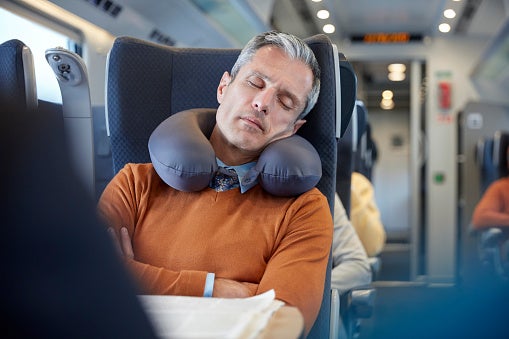
- Pros: Good for short naps and head stabilization while sitting or reclined.
- Cons: Often too narrow to support full cervical curve for extended bed use.
Memory foam travel pillows
- Pros: Conform to your neck and offer steady support. Best for gentle night use.
- Cons: Can retain heat; choose ventilated foam to reduce warmth.
Inflatable pillows
- Pros: Adjustable firmness and very portable.
- Cons: Can deflate overnight and may not deliver consistent support.
Wrap-around and scarf-style pillows
- Pros: Versatile for side or back support and keep the neck aligned.
- Cons: May not provide enough lift for heavier heads.
Flat rectangular or bolster travel pillows
- Pros: Often the best substitute for a bed pillow because they mimic a small neck roll.
- Cons: Size may be too small for people who need full shoulder support.

How to use a travel pillow in bed for best sleep
Using a travel pillow smartly makes a big difference. Here are clear, simple placement tips for common sleep positions.
Back sleepers
- Place the travel pillow under the natural curve of your neck.
- Keep your head centered and your chin slightly down to maintain neutral alignment.
Side sleepers
- Use a firmer travel pillow or stack it on top of a low bed pillow to fill the gap between ear and shoulder.
- Consider placing a small travel bolster between knees to maintain hip alignment.
Stomach sleepers
- Travel pillows are usually not recommended for stomach sleeping because they raise the head too much. Use a very flat pad if needed.
Multi-purpose uses
- Use a travel pillow under the knees to reduce lower back strain.
- Use it as lumbar support when reading or reclining.
Practical setup tips
- Try different orientations: rotated, flipped, or stacked with your regular pillow.
- Test for a few nights to see whether it reduces morning stiffness or worsens it.

Cleaning and maintenance
Keeping a travel pillow clean is simple but essential to maintain comfort and hygiene.
Cleaning steps
- Check the care label for machine-wash instructions. Many removable covers are washer-safe.
- For memory foam, spot clean and air dry fully; do not submerge foam.
- For inflatable models, wipe the surface with mild soap and water and allow thorough drying.
Hygiene tips
- Wash covers weekly if you use the pillow nightly.
- Replace foam pillows every 1–2 years or when they lose shape.
- Use a thin cotton sleeve for extra protection and easier washing.
Buying guide: choose the best travel pillow for bed use
When you shop, look for features that make a travel pillow durable, comfortable, and suitable for bedside use.
Top features to consider
- Firmness: medium-firm usually supports neck curvature without lifting the head too high.
- Shape: a small cervical roll or flat rectangular pillow often works best for bed use.
- Material: memory foam or high-quality polyester fibers with breathable covers.
- Washability: removable, machine-washable covers are ideal.
- Size: choose a pillow large enough to support your neck but small enough to be comfortable in bed.
- Adjustability: inflatable or adjustable inserts help you fine-tune height and feel.
Budget and value
- Low-cost inflatable models are fine for travel but may not hold up for nightly bed use.
- Mid-range memory foam often provides the best balance of support and longevity.
Personal experience and practical tips
From testing dozens of pillows over trips and home use, I learned which choices matter most.
What worked for me
- A small memory foam travel cervical roll gave me relief during nights in unfamiliar beds.
- Layering a travel pillow on top of a thin bed pillow prevented my head from tilting forward.
- I found that washable covers and breathable fabrics cut down on overnight heat.
Mistakes to avoid
- Don’t expect a U-shaped travel pillow to replace a full-size pillow for side sleeping.
- Avoid very soft, cheap travel pillows if you need real neck support.
Quick checklist before you buy
- Test the pillow for at least two nights.
- Check return policies and warranties.
- Prioritize washability and proper support over style.

Frequently Asked Questions of can i use travel pillow in bed
Will a travel pillow damage my neck if I use it in bed?
Most travel pillows will not damage your neck when used short-term. Long-term use without proper alignment can cause stiffness, so monitor how your neck feels.
Which travel pillow type is best for back sleepers in bed?
Memory foam cervical rolls and flat rectangular travel pillows work best for back sleepers. They support the natural neck curve without lifting the head too much.
Can a travel pillow replace my regular bed pillow?
A travel pillow can replace your bed pillow temporarily but is rarely a long-term substitute for most people. Regular pillows are designed for full-night support and larger shoulder coverage.
How often should I clean a travel pillow used in bed?
Wash removable covers weekly and spot-clean the inner pillow as needed. Replace foam pillows every 1–2 years if they lose shape.
Is an inflatable travel pillow suitable for nightly bed use?
Inflatable pillows are adjustable but can deflate and offer inconsistent support overnight. They’re better as a temporary solution than a permanent bed pillow.
Can I use a travel pillow for side sleeping?
You can, but choose a firmer or thicker travel pillow and test it on top of your regular pillow. Many side sleepers need a larger pillow to fill the shoulder gap.
Conclusion
A travel pillow can be a useful bedside tool when you need short-term neck support, temporary comfort, or a portable solution for travel and naps. Choose the right type, test placement for your sleep style, and maintain cleanliness to get the most benefit. If you have chronic neck pain or breathing issues, consult a clinician before switching pillows. Try a memory foam cervical roll or a small rectangular travel pillow for home trials, and see whether it improves your morning comfort. Share your experiment in the comments, subscribe for more sleep tips, or explore pillow reviews to find the best match for your needs.


